

Ask most Indian travellers to name a visa-free island getaway, and you’ll hear the same three answers on repeat: Mauritius, Seychelles, Maldives. All genuinely wonderful, all genuinely crowded with familiarity. Madagascar rarely makes that list, which is exactly the point. It’s one of the most distinctive landmasses on Earth — home to wildlife found nowhere else, dramatic landscapes ranging from rainforest to spiny desert, and a culture shaped by African, Asian, and European influences all at once — and it remains one of the more accessible islands for Indian passport holders, with entry that’s straightforward by most accounts. If you’ve been circling the same three island names every time you plan a trip, here’s why Madagascar deserves a genuine look.
Background: Why Madagascar Stays Off Most Travel Lists
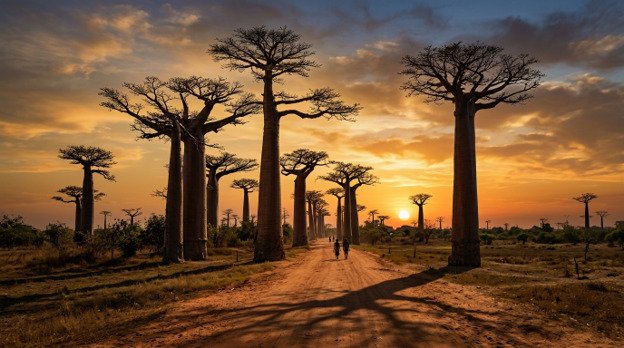
Madagascar separated from mainland Africa roughly 88 million years ago, which is the reason its wildlife evolved in near-total isolation — around 90% of its plant and animal species exist nowhere else on the planet. Lemurs, baobab trees, and chameleons found only here have made it a favourite among naturalists and documentary crews for decades, yet mainstream tourist traffic has never really followed. Part of that is infrastructure — Madagascar’s road network and tourism facilities are still developing in many regions, which keeps visitor numbers modest compared to its Indian Ocean neighbours. But that’s also precisely what gives it a different kind of appeal: less manicured, more genuinely wild, and considerably less crowded than Mauritius or the Seychelles at comparable price points.
Why You Should Consider Visiting Madagascar
- Wildlife you genuinely can’t see anywhere else. Lemurs, fossas, and an extraordinary range of chameleons and reptiles make Madagascar a serious destination for nature lovers, not just a beach backdrop.
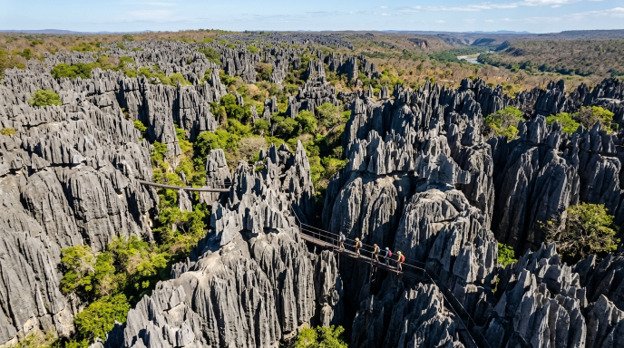
- Dramatically varied landscapes in one country. Rainforest in the east, the otherworldly limestone spires of the Tsingy de Bemaraha, baobab avenues in the west, and pristine beaches on islands like Nosy Be.
- A genuinely underrated price point. Accommodation, food, and local transport are generally more affordable than Mauritius or the Seychelles.
- Low tourist density. You’re far less likely to be sharing a beach or a trail with large tour groups here than at better-known Indian Ocean destinations.
- A distinct cultural mix. Malagasy culture blends Southeast Asian, African, and Arab influences in a way that feels genuinely different from its regional neighbours.
Step-by-Step: How to Plan a Trip to Madagascar
Step 1 — Confirm your current entry requirement before booking. Sources differ on exactly how Indian citizens should enter — some describe visa-free entry for stays up to 90 days, while others point to an e-visa or visa-on-arrival process. Check Madagascar’s official immigration guidance or your nearest diplomatic mission directly before finalising flights, since this is one detail worth verifying rather than assuming.
Step 2 — Decide which region(s) you want to focus on. Madagascar is large and road travel between regions is often slow — trying to cover the whole island in one trip usually means seeing less of each place properly. Pick one or two regions (e.g., Andasibe’s rainforest plus Nosy Be’s beaches) rather than attempting everything.
Step 3 — Book domestic flights early if combining regions. Given road conditions, domestic flights between major hubs are often more practical than overland travel for multi-region itineraries.
Step 4 — Arrange accommodation and guides in advance for national parks. Many of Madagascar’s best wildlife experiences require a local guide, and popular parks can have limited lodging nearby.
Step 5 — Pack for genuine variability. Depending on your route, you may move between humid rainforest, dry western plains, and coastal beach climates within a single trip — layer accordingly.
Step 6 — Build in buffer time. Flight delays and road conditions are more common here than in more developed tourist destinations — a tightly scheduled itinerary risks unraveling quickly.
Benefits of Visiting Madagascar
- An easier entry process than many comparably distinctive destinations, at least by several current accounts
- Genuinely unique wildlife experiences unavailable anywhere else on Earth
- Lower costs relative to comparable Indian Ocean islands
- Fewer crowds, even at well-known attractions
- A wide range of landscapes and experiences within a single country
Eligibility & Requirements
- Valid Indian passport with sufficient remaining validity for your travel dates
- Proof of onward or return travel, commonly requested at immigration
- Proof of accommodation for your stay
- Yellow fever vaccination certificate, if arriving from a country with risk of yellow fever transmission
- Sufficient funds for your visit, occasionally checked at entry
Given the conflicting information on the exact entry mechanism for Indian travellers, treat this as the single most important thing to confirm before booking non-refundable flights.
Costs & Timeline Snapshot
| Item | Typical Range |
| E-visa fee (if applicable) | Roughly ₹900+ for a 15-day visa, varying by duration and processing speed |
| E-visa processing time (if applicable) | Around 4–6 working days |
| Mid-range accommodation (per night) | Generally lower than Mauritius or Seychelles equivalents |
| Domestic flights between regions | Necessary for most multi-region itineraries; budget accordingly |
| Recommended trip length | 7–10 days minimum to properly cover one or two regions |
Given the source discrepancy noted above, treat any visa fee figure as a starting reference only, and confirm the current process and cost directly with Madagascar’s immigration authorities or a licensed visa service before travel.
Latest Tours and Travel Updates for 2026
- Entry requirement guidance for Indian travellers varies across current sources — some describe Madagascar as fully visa-free for Indian passport holders for stays up to 90 days, while others describe an e-visa (“Electronic Landing Authorisation”) or visa-on-arrival system. This inconsistency itself is worth noting, and travellers should verify directly with official channels rather than relying on any single source, including this one.
- India’s own visa-free access list has been shifting through 2026, with several countries added and a few removed — a reminder that entry requirements across the board are worth double-checking close to your travel dates rather than assuming last year’s rules still apply.
- Interest in “underrated” Indian Ocean and African island destinations has grown noticeably in travel media through 2025–2026, as more travellers look beyond the traditional Mauritius-Seychelles-Maldives circuit for a different kind of island experience.
Common Mistakes to Avoid
- Assuming a single, universally agreed entry process. Given the conflicting guidance on Madagascar’s visa requirements for Indians, don’t book flights before confirming directly with an official source.
- Underestimating travel time between regions. Madagascar’s size and road conditions mean a packed multi-region itinerary can easily become exhausting rather than enjoyable.
- Skipping the yellow fever vaccination check. Requirements can depend on your travel history, not just your nationality — verify what applies to your specific routing.
- Booking without a local guide for national parks. Many of Madagascar’s best wildlife sightings depend on experienced local guides who know current animal locations and trail conditions.
- Overpacking the itinerary. Trying to see rainforest, desert, and beach regions in a short trip usually means rushing through all of them rather than experiencing any properly.
Expert Tips
- If wildlife viewing is your priority, time your trip around dry season in your chosen region, since conditions vary significantly across Madagascar’s different climate zones.
- Prioritise depth over breadth — one or two well-explored regions will likely leave you with a better impression of Madagascar than a rushed loop trying to see everything.
- Book domestic flights as early as possible, since seat availability on internal routes can be limited.
- Confirm your entry requirement with an official source at least a few weeks before travel, given how much the guidance varies across secondary sources.
Frequently Asked Questions
1. Do Indian citizens need a visa to visit Madagascar?
Sources vary — some describe visa-free entry for Indian citizens for stays up to 90 days, while others describe an e-visa or visa-on-arrival requirement. Confirm directly with Madagascar’s official immigration guidance before booking.
2. What is Madagascar best known for?
Its extraordinarily unique wildlife, including lemurs and chameleons found nowhere else on Earth, along with dramatic landscapes ranging from rainforest to the limestone spires of the Tsingy de Bemaraha.
3. How many days should I spend in Madagascar?
At least 7–10 days is recommended to properly explore one or two regions, given the island’s size and the time domestic travel between regions typically requires.
4. Is Madagascar cheaper than Mauritius or the Seychelles?
Generally yes — accommodation, food, and local transport tend to be more affordable than comparable Indian Ocean island destinations.
5. What’s the best time of year to visit Madagascar?
This varies by region and depends on your specific itinerary — dry season timing differs across the island’s varied climate zones, so it’s worth researching your specific route rather than assuming one “best time” applies island-wide.
6. Is Madagascar safe for tourists?
Like any destination, safety varies by region and situation — check current travel advisories from India’s Ministry of External Affairs before finalising plans, and consider working with an experienced local guide or tour operator.
7. Do I need a yellow fever vaccination for Madagascar?
This can depend on your travel history and routing — verify current requirements based on where you’re travelling from before your trip.
8. Can I combine Madagascar with other Indian Ocean islands?
Yes, Madagascar is often combined with Mauritius, Réunion, or the Comoros as part of a wider Indian Ocean itinerary, given its regional proximity.
9. What wildlife can I see in Madagascar that I can’t see elsewhere?
Numerous lemur species, the elusive fossa, and a wide range of chameleons and reptiles are found only in Madagascar, alongside its distinctive baobab trees.
10. Is Madagascar a good destination for a first-time visitor to Africa?
It can be, though its size and developing infrastructure mean it rewards travellers who plan carefully and focus on a manageable number of regions rather than trying to see everything in one trip.
Conclusion: Worth Looking Past the Usual Three Names
Madagascar isn’t a destination that shows up by accident on most travel shortlists — it takes a bit of deliberate curiosity to consider it over the well-worn Mauritius-Seychelles-Maldives circuit. But for travellers willing to do that little bit of extra research, especially around confirming the current entry process, it offers something genuinely different: unique wildlife, dramatic landscapes, and a level of authenticity that’s increasingly hard to find at more established island destinations.
Elite Travel Guru helps travellers research and plan exactly these kinds of underrated destinations — confirming current entry requirements, building realistic regional itineraries, and making sure the details are right before you book. Contact Elite Travel Guru today to see if Madagascar fits your next trip.