

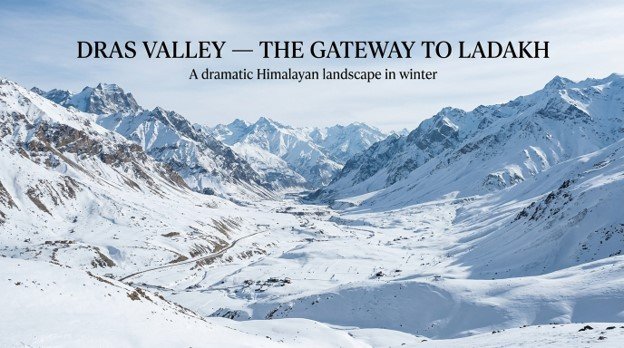
Somewhere in Ladakh’s Kargil district sits a small town where winter nights have been unofficially recorded at minus 60 degrees Celsius — cold enough that locals half-joke it gives parts of Siberia a run for their money. Dras, often spelled Drass, isn’t a remote research outpost or a seasonal camp. People live here year-round, in houses built with walls thick enough to survive months where the mercury rarely climbs above freezing, even at midday. It’s officially recognized as the second-coldest inhabited place on Earth, and for travelers drawn to extreme, genuinely unusual destinations, it’s one of the most striking places India has to offer.
Background: Why Dras Gets This Cold
Dras sits at an altitude of roughly 10,000 to 11,000 feet, nestled in a narrow valley surrounded by high Himalayan peaks — geography that works against it in winter in a very specific way. Cold air naturally sinks and settles in valleys, and Dras’s surrounding mountains trap that air rather than letting it disperse. Add consistently clear skies and dry conditions, which accelerate heat loss overnight with nothing to hold warmth in, and you get a town where even “regular” winter nights fall below minus 25 degrees Celsius, with extreme lows occasionally reported near minus 60. The town carries real historical weight too. Known as the “Gateway to Ladakh” for travellers heading further into the region from Srinagar, Dras also sits near the Kargil War Memorial, commemorating the 1999 conflict fought partly in the surrounding mountains — a detail that gives a visit here more depth than just chasing an extreme-weather photo opportunity.
What It’s Actually Like to Visit Dras
- Genuinely dramatic scenery. Snow-capped peaks, the Dras River valley, and Mushkoh Valley nearby offer landscapes that feel distinctly different from the rest of Ladakh’s high-desert terrain.
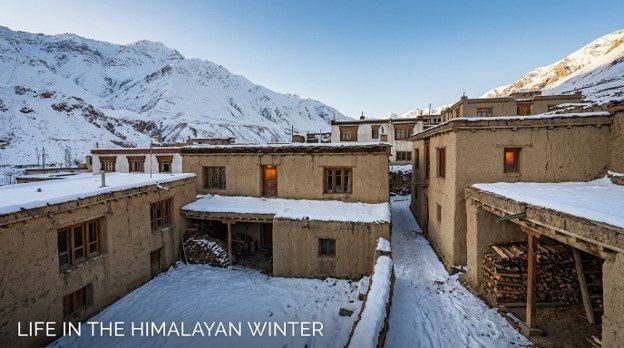
- A real sense of resilience. Traditional Ladakhi homes here use thick mud walls and flat, snow-layered roofs specifically engineered for extreme cold — worth seeing up close rather than just reading about.
- Historical significance. The Kargil War Memorial and Tiger Hill are both nearby, adding a layer of meaning beyond the extreme-climate novelty.
- A gateway, not a dead end. Dras sits along the Srinagar-Leh highway, making it a natural stop for travellers continuing on to Leh and the rest of Ladakh.
- Summer accessibility most people don’t expect. Despite its brutal winters, Dras is a genuinely pleasant, popular stop during summer months when the highway is open and temperatures are mild.
Step-by-Step: How to Plan a Trip to Dras
Step 1 — Choose your season deliberately.
Winter (roughly December through February) delivers the extreme-cold experience Dras is famous for, but comes with serious logistical challenges. Summer (May through September) offers accessible, scenic travel with none of the winter risk.
Step 2 — Fly into Leh or Srinagar.
Leh is the nearer airport for onward travel into Ladakh; Srinagar is the more common entry point if approaching via the Kashmir route along the Srinagar-Leh highway.
Step 3 — Confirm the highway’s operational status before travelling.
The Srinagar-Leh highway, Dras’s primary lifeline, closes seasonally with heavy snowfall — sometimes as early as November — and reopening dates vary year to year.
Step 4 — Book accommodation with winter capability in mind,
if travelling in the cold season. Not every guesthouse is equipped for extreme sub-zero stays; confirm heating arrangements directly before booking.
Step 5 — Pack for genuinely extreme cold if visiting in winter.
Standard winter gear isn’t sufficient at minus 25°C and below — this requires expedition-grade cold weather equipment, not a regular puffer jacket.
Step 6 — Build in buffer days.
Given the region’s weather unpredictability, rigid schedules around a Dras visit carry real risk of disruption, especially outside peak summer season.
Benefits of Visiting Dras
- A genuinely rare travel experience, visiting one of the only places on Earth where people live through such extreme cold
- Striking, under-photographed landscapes compared to Ladakh’s more famous, more crowded destinations
- Meaningful historical context through the Kargil War Memorial
- A natural stop on the classic Srinagar-Leh route, rather than requiring a dedicated separate trip
- A strong summer travel option, for those who want the scenery without the winter extremes
Eligibility & Requirements
- Indian citizens can travel freely, though Ladakh’s proximity to sensitive border areas means some zones nearby may require Inner Line Permits — check current requirements for any specific excursions beyond the main Dras-Kargil-Leh corridor.
- Foreign nationals should confirm current permit requirements for the broader Ladakh region before travel, as rules can vary by specific area and have changed periodically in recent years.
- Winter travel requires appropriate cold-weather gear and, ideally, prior high-altitude travel experience.
- Basic medical fitness is worth confirming given the altitude (10,000+ feet) combined with extreme cold exposure.
Costs & Timeline Snapshot
| Item | Typical Range |
| Flights to Leh (round trip, from major Indian cities) | ₹8,000 – ₹18,000, varies by season and booking window |
| Guesthouse/hotel stay in Dras (per night) | ₹1,500 – ₹4,000, winter-equipped options priced higher |
| Local transport (Srinagar-Leh highway route) | Varies by shared taxi vs. private hire |
| Recommended trip length (as a stop en route to Leh) | 1–2 nights |
| Best travel window | May – September (accessible); December – February (extreme cold experience) |
Latest Tours and Travel Updates for 2026
- Dras continues to draw winter tourism interest specifically because of its extreme-cold reputation, with content creators and travel documentarians regularly featuring the town’s daily life in recent years.
- The Srinagar-Leh highway’s seasonal closure timing varies annually based on snowfall, with recent years seeing closures as early as November — a genuinely important factor for anyone planning a winter visit and relying on this route.
- Ladakh’s broader tourism infrastructure has continued developing, gradually improving accessibility to secondary destinations like Dras beyond the main Leh tourist circuit.
Common Mistakes to Avoid
- Underestimating winter cold severity. Minus 25°C as a “normal” winter night, with extremes near minus 60°C, requires genuinely serious cold-weather preparation, not standard winter travel gear.
- Relying on the Srinagar-Leh highway without checking current conditions. Seasonal closures can happen earlier than expected, disrupting travel plans with little warning.
- Treating Dras purely as a photo-op destination. The Kargil War Memorial nearby deserves a respectful, meaningful visit, not just a quick stop.
- Assuming all accommodation is winter-ready. Confirm heating and insulation directly with any guesthouse before booking a cold-season stay.
- Skipping altitude acclimatisation. At 10,000+ feet, combined with extreme cold, rushing straight into strenuous activity without acclimatising can be genuinely risky.
Expert Tips
- If you want the full extreme-cold experience, travel in January, typically the coldest month, but go with a guide or tour operator experienced in the region’s winter conditions.
- If you’d rather see Dras’s scenery without the winter risk, the May-September window offers the same dramatic landscapes in a far more accessible, comfortable package.
- Pair your Dras visit with the Kargil War Memorial for a more complete, meaningful trip rather than treating it as a separate stop.
- Check the Srinagar-Leh highway’s current status directly before finalising any itinerary that depends on it, particularly for shoulder-season travel in October or November.
Frequently Asked Questions
1. Is Dras really the coldest inhabited place in the world? Dras is officially recognised as the second-coldest inhabited place on Earth, after Siberia, with unofficial winter lows reported near minus 60 degrees Celsius.
2. Where exactly is Dras located? Dras is a town in Ladakh’s Kargil district, roughly 141 kilometres from Srinagar, situated at an altitude of around 10,000 to 11,000 feet.
3. What is the best time of year to visit Dras? May through September offers the most accessible, comfortable travel conditions; December through February delivers the extreme-cold experience Dras is known for, but with far greater logistical challenges.
4. How cold does it actually get in Dras? Regular winter nights often fall below minus 25 degrees Celsius, with unofficial extreme lows reported near minus 60 degrees Celsius in past years.
5. How do I get to Dras? The most common routes are flying into Leh or Srinagar and travelling via the Srinagar-Leh highway, on which Dras sits as a natural stopping point.
Conclusion: A Genuinely Extreme Corner of India Worth Experiencing
Dras isn’t a destination most travellers stumble into by accident — it takes a deliberate decision to seek out one of the coldest inhabited places on the planet. Whether you visit in the dead of winter for the full extreme-cold experience, or in the warmer months to take in its dramatic scenery without the risk, it’s a genuinely different kind of Indian travel story than the usual beach or hill-station circuit.Elite Travel Guru helps travellers plan exactly these kinds of distinctive, logistically complex trips — checking current highway and weather conditions, arranging appropriate cold-weather travel support, and building realistic itineraries around genuinely extreme destinations. Contact Elite Travel Guru today to start planning your Ladakh and Dras trip.